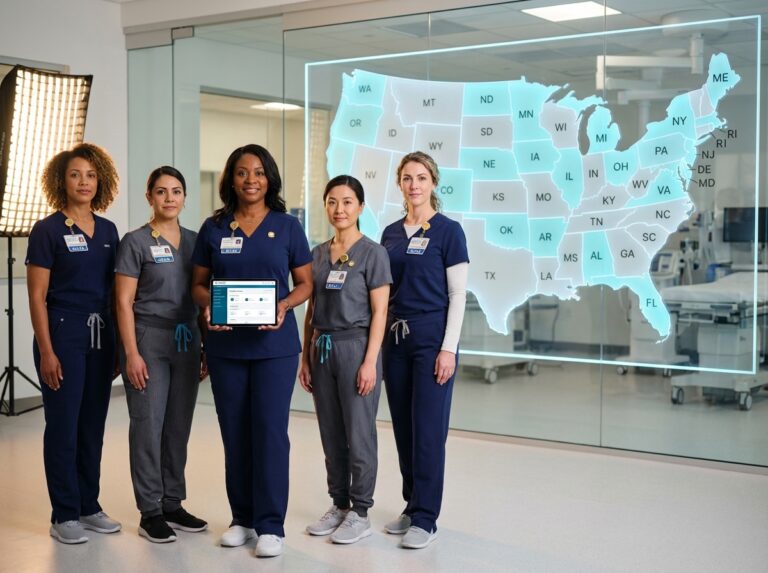
Verifying nursing licenses protects patients, employers, and nurses by confirming credentials, exam history, and disciplinary status. This guide explains how to perform accurate license lookups across all 50 states, compares national systems and state board tools, and shows practical steps for employers and nurses to check RN, LPN, and APRN credentials, including compact and international verification considerations.
Why License Verification Matters and What to Prepare
Verifying a nursing license is not just a routine administrative task; it is a fundamental pillar of patient safety in the United States healthcare system. When a facility confirms a nurse has the right credentials, they are protecting the public from potential harm. This process ensures that every individual providing care has met the rigorous educational and ethical standards required by law. For employers, this is a matter of regulatory compliance. State and federal laws mandate that healthcare providers only hire licensed professionals. Failing to do so can lead to massive legal liabilities. Insurance companies often refuse to cover claims if an unlicensed individual was involved in a patient incident. Risk management teams prioritize these checks to avoid lawsuits and heavy fines from government agencies.
Understanding the specific terms used in the verification process is the first step toward accuracy. A licensee type tells you the specific scope of practice for the professional. This includes Licensed Practical Nurses (LPN) or Licensed Vocational Nurses (LVN), as well as Registered Nurses (RN) and Advanced Practice Registered Nurses (APRN). Each type has different responsibilities and legal limits. Endorsement refers to the process where a nurse obtains a license in a new state based on a license they already hold elsewhere. Reciprocity is a similar concept where states agree to recognize each other’s standards. A compact license, stemming from the Nurse Licensure Compact (NLC), is a modern solution for nurse mobility. This allows a nurse to have one multistate license to practice in many participating states. You can see the current list of members at the Compact Nursing States List.
The NCLEX is the national exam that every nurse must pass to get their initial license. Primary source verification is the gold standard for checking these details. It means getting information directly from the Board of Nursing or an authorized database like Nursys. This is significantly safer than relying on a photocopy of a license, which could be altered. Disciplinary actions are also part of the public record. These marks show if a nurse has faced trouble for professional misconduct or clinical errors.
Before you begin a search, you should gather a specific set of information. Having these details ready prevents errors and saves time. Both employers and individual nurses should keep a checklist of the following items.
Full Legal Name and Aliases
Always use the exact name found on a government-issued ID. Many nurses change their names due to marriage or divorce. Records might still be under a previous name or a maiden name. Searching for all known aliases is a best practice to find the complete history of a professional.
License Type and Number
Specify if you are looking for an RN or an LPN. Having the unique license number is the fastest way to get an exact match. This number is assigned by the state board and stays with the nurse throughout their career in that state.
Issuing State
You must know which state board granted the license. While many states share data, some still require you to search their specific state database.
Date of Birth
This is a critical identifier. It helps distinguish between two people who have the same name. In a large state, there might be several nurses with identical names.
Social Security Number
Some official search tools require the last four digits of a Social Security Number. This adds a layer of security and ensures the record belongs to the right person.
NCLEX Candidate Number
This is helpful for new graduates who are waiting for their permanent license number to be issued. It proves they have completed the testing process.
APRN Specialty
Advanced practice nurses often have specific certifications. You should know if they are a Nurse Practitioner or a Clinical Nurse Specialist. Their specialty area like pediatrics or family practice should be noted.
Consent and Authorization
Employers must have written permission from the nurse before running a background check or a detailed credential search. This is a legal requirement for many hiring processes.
When you look up a license, the results will show the current status of the professional. It is important to know what each status means for their ability to work.
| License Status | Meaning for Practice |
|---|---|
| Active | The nurse is in good standing and can practice fully. |
| Expired | The license is no longer valid. The nurse cannot work. |
| Suspended | The right to practice has been taken away temporarily. |
| Revoked | The license has been permanently cancelled due to misconduct. |
| Probation | The nurse can work but must follow specific board orders. |
| Pending | The application is still being reviewed by the board. |
The public record will also show expiration and renewal dates. You should check these to ensure the license will not expire in the middle of a contract. Many states also list Continuing Education requirements. This shows if the nurse is staying current with their professional development. Disciplinary summaries are often included in the search results. These provide a brief look at any past issues. If a nurse has a history of discipline, the board will usually provide a link to the legal documents explaining the case.
Misleading entries are a common problem during the lookup process. Similar names can lead to a false match. You might find a record for a nurse with the same name who has a disciplinary history. This is why verifying the date of birth and the license number is so important. Old licenses that have been inactive for years might also appear in the results. Some nurses hold licenses in five or six different states. You must ensure you are looking at the correct record for the state where the work will happen. If the information seems conflicting, the best step is to contact the state board directly. You can find their details in a Nursing License Lookup directory.
Data privacy is a major concern when handling these records. Nurses are sharing sensitive personal information. Employers have a responsibility to keep this data secure. Information like Social Security Numbers and birth dates should never be stored in an unsecured file. When an employer runs a verification, they should be transparent about why they are doing it. Nurses should also be careful about who they give their full license details to. Only share this information with verified employers or official regulatory bodies. Using secure portals for sharing credentials helps prevent identity theft and fraud in the nursing profession. Proper consent and secure handling of data build trust between the nurse and the employer. This trust is essential for a smooth hiring process and long term professional success.
Step by Step How to Verify Nursing Credentials Across States
Verifying a nursing license is a precise task that requires using the right tools in the correct order. The most efficient starting point for any search is the national database known as Nursys. This system is managed by the National Council of State Boards of Nursing (NCSBN) and serves as a central hub for data from nearly all state boards. It is considered a primary source equivalent. This means the information comes directly from the boards of nursing without any middleman. You can use the QuickConfirm service on the website to look up a nurse by name or license number. This tool is free for the public and provides immediate results regarding the status of a license. It also shows if there are any public disciplinary actions or alerts associated with that individual.
Using National Verification Tools
Nursys QuickConfirm and e-Notify
When you use the QuickConfirm tool, you should have the full legal name of the nurse or their specific license number. A suggested search query to find the correct portal is “Nursys QuickConfirm license search.” If you search by name, the system might return multiple results for common names. You can narrow these down by selecting the state or the license type. The results will display the license type, the state that issued it, the license number, and the current status. It also includes the expiration date. For employers, the e-Notify system is a more robust option. This is a subscription service that allows facilities to track their entire nursing staff in one place. It provides real-time updates. If a nurse on your list has a license that is about to expire or if a board of nursing takes a disciplinary action, the system sends an automated alert. This removes the need for manual monthly checks and helps maintain compliance with federal regulations.
NCLEX Verification Features
Nursys also includes a feature to verify NCLEX examination results. This is particularly useful for new graduates who have passed the exam but might not have their permanent license number yet. It confirms that the individual has met the national testing standard for entry into the profession. You can find this information by searching the licensure and disciplinary database. It provides a clear record of the exam date and the passing status. This data is essential for facilities that hire recent graduates under temporary permits or while they wait for final state processing.
Navigating State Board Lookups
While most states participate in the national database, there are times when you must go directly to a specific state board of nursing website. This happens if a state is one of the few that does not share full data with Nursys or if you need very specific details like continuing education history that might not be in the national system. To find the correct site, you should use an authoritative directory. The List of State Boards of Nursing provides direct links to every jurisdiction in the United States. Once you are on a state board website, look for a section labeled License Verification or Verify a License.
Steps for State Level Searches
Most state portals offer two ways to search. You can use the license number or a combination of the first and last name. If the nurse has a common name, the system may ask for the last four digits of their Social Security number or their date of birth to confirm the identity. When the results appear, you must look closely at the status field. An active status is the goal, but you might see terms like lapsed, inactive, or encumbered. If a license is encumbered, it means there are restrictions on the nurse’s ability to practice. Most state boards provide a link to the specific legal documents if there is a history of discipline. You should download these records for your files if you are an employer. These documents explain the nature of the violation and any requirements the nurse must follow, such as supervised practice or mandatory drug testing.
Walk-Through Licenses for Urgent Needs
If a nurse needs to start work immediately in a new state, a “walk-through” license might be an option. These are temporary permits issued quickly while the permanent license is processed. For example, Arizona can often process these in 48 hours if there is a valid job offer. States like South Carolina also have expedited processes. You can find more details in a guide to walk through states. Note that these are not the same as compact licenses; they are temporary and only valid in that specific state.
Verifying Compact and Multistate Licenses
The Nurse Licensure Compact (NLC) is a major part of modern nursing. Currently, over 40 jurisdictions have joined this agreement. This allows a nurse to hold one multistate license and practice in any other compact state. However, verification for these licenses has specific rules. You must confirm the nurse’s primary state of residence. A nurse can only hold a multistate license in the state where they legally reside. If a nurse lives in a non-compact state like New York but holds a license in a compact state like Florida, that license is only valid in Florida. It is a single-state license. You can check the current status of the compact and which states are members at NURSECOMPACT. When you run a search in Nursys, the results will explicitly state whether the license has multistate or single-state privileges. This is a critical distinction for travel nurses or those working in telehealth across state lines.
International Nurse Credentialing
Verifying the credentials of a nurse educated outside the United States involves extra steps. These nurses must have their education evaluated to ensure it is equivalent to a US nursing program. The Commission on Graduates of Foreign Nursing Schools, or CGFNS, is the primary organization for this. They provide a primary source verification report. Employers should request this report to confirm the nurse’s original education and license from their home country. Additionally, you must verify their eligibility to work in the US through visa or alien registration checks. Even if an international nurse has passed the NCLEX, you still need to confirm that their initial credentials were authenticated by a recognized body before they were allowed to sit for the exam.
Specialty Certifications and Troubleshooting
State licenses and specialty certifications are not the same thing. A state license gives a nurse the legal right to practice. A specialty certification shows they have advanced knowledge in a specific area like critical care or pediatrics. These are issued by private bodies such as the American Nurses Credentialing Center (ANCC) or the American Association of Critical-Care Nurses. You cannot verify these through Nursys or a state board. You must go to the website of the specific certifying body. You will usually need the nurse’s certification number and their last name. Employers should always ask for a copy of the actual certificate and then verify it at the source to prevent the use of forged documents.
Solving Common Search Problems
Sometimes a search returns no results. This is often due to a name change after marriage or a typo in the system. If a name search fails, try searching by the license number alone. If that also fails, ask the nurse for a copy of their most recent renewal notice. This document often contains the exact name and number as it appears in the state records. If you find duplicate records, it usually means the nurse has held licenses in multiple states. You must check each one to ensure there are no hidden disciplinary actions in another jurisdiction. If you need an official document for legal or insurance purposes, you can request a formal primary source verification from the state board. This usually involves a small fee and provides a certified record of the nurse’s standing.
Timelines and Best Practices for Employers
The time it takes to verify a license varies. A Nursys search is instant. However, if you are applying for a license by endorsement in a new state, the board may take several weeks to process the verification. The fee for a Nursys verification for endorsement is currently $30 per state. Some states offer expedited processing for temporary licenses, which can happen in as little as 48 hours if all background checks are clear. Employers should maintain a strict verification log. This log should include the date of the check, the person who performed it, and a screenshot of the result. It is best practice to re-verify every license at least once a year or whenever a license is up for renewal. You should also trigger a new verification if a nurse is rehired after a break in service. Always obtain written consent from the nurse before running these checks and store the data in a secure, encrypted system to protect their privacy.
Operational Checklists and State Resources
The current landscape of nursing licensure is more connected than ever. The system relies on a mix of national databases and state-specific rules. Understanding how to navigate these tools is vital for maintaining safety in healthcare settings. For nurses, it ensures their ability to work. For employers, it protects patients and meets legal requirements.
Immediate Actions Checklist
Nurses should take these steps today:
- Run a self-check on the national database to ensure your info is correct.
- Update your primary state of residence if you have moved recently.
- Keep a digital folder with copies of all your active licenses and certifications.
Employers should take these steps today:
- Review your current verification policy to ensure it covers all 50 states.
- Sign up for the e-Notify system to automate license monitoring.
- Create a central file for all verification records with a clear retention schedule.
- Bookmark the NCSBN active RN licenses page for quick reference.
Summary Table for Retention and Frequency
| Action Type | Recommended Frequency | Retention Period |
|---|---|---|
| Initial Hire Verification | Once before start date | 7 years after termination |
| Routine Re-verification | Annually or at renewal | 3 to 5 years |
| Compact Status Check | Upon move or PSR change | Duration of employment |
| Specialty Certification | At expiration date | 3 years |
Navigating State Specific Details
Every state has its own quirks regarding physical addresses and contact methods. For example, the North Carolina Board of Nursing is located at 4516 Lake Boone Trail in Raleigh (919-782-3211). If you are looking for information in Nebraska, the board is at 301 Centennial Mall South in Lincoln (402-471-4376). Knowing these details helps when the online systems are down or when you need to speak with someone directly regarding a discrepancy.
Handling Conflicting Information
It is common to find small errors in a license lookup. A name might be spelled wrong or a middle initial might be missing. If you find conflicting info, do not ignore it. Ask the nurse for their original license document. Compare it to the online record. If the discrepancy remains, call the board of nursing. They can tell you if there is a pending update or if the record belongs to a different person with a similar name.
Final Thoughts on Compliance
Staying compliant with nursing licensure rules is a full-time job. The rules change as more states join the compact. Keeping up with these changes is the only way to ensure your staff is properly credentialed. Use the tools available like Nursys and state board directories. Document everything. By following a strict workflow, you protect your career as a nurse or your organization as an employer.
Sources
- Compact Nursing States List 2026 | Licensure Map – Nurse.org — Everything you need to know about the changes being made to multi-state licensure (eNLC.)
- List of State Boards of Nursing (BON) in the U.S. Updated for 2025 — Plus, access a complete directory of all U.S. state and territorial nursing boards to find contact details, verify licenses, or understand your …
- Walk-Through States for Nursing Licensure: Full 2025 Guide — Explore which states offer walk-through nursing licenses, how to apply, and key differences from compact states. Updated for 2025—perfect for travel and …
- Nursing Licensure by State — Below is a list of all 50 States and some informations regarding the licensure and certification: Alabama · Alaska · Arizona · Arkansas …
- Home | NURSECOMPACT — The Nurse Licensure Compact (NLC) allows for nurses to have one multistate license with the ability to practice in all compact states which increases access …
- Active RN Licenses – NCSBN — This is the first-ever comprehensive source of nursing licensure statistics for the US and its territories. This data is compiled by NCSBN's database, Nursys.
- License Verification (Nursys.com) – NCSBN — Nurses can verify their licenses by completing the Nursys verification process for $30 per license type, per each board of nursing where the nurse is applying.
- Nursys® — Nursys is the only national nurse licensure and disciplinary database. As a primary source equivalent the data is provided directly from the boards of nursing.
- U.S. Nursing License Lookup by State – Health Guide USA — Use our comprehensive U.S. Nursing License Lookup directory to quickly verify a nursing license status by state. Find links to official nursing board …
- QuickConfirm License Verification Terms & Conditions – Nursys® — Nursys provides online verification for endorsement to a nurse requesting to practice in another state, nurse license lookup reports to employers & the …
EMPTY